


Your shopping cart is empty!
Bears garlic (Ramsons, Wild Garlic)
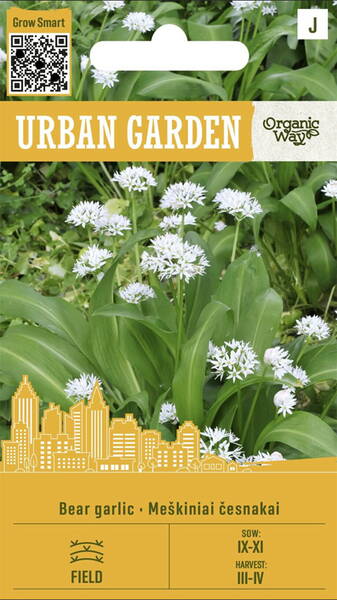
Eco seeds
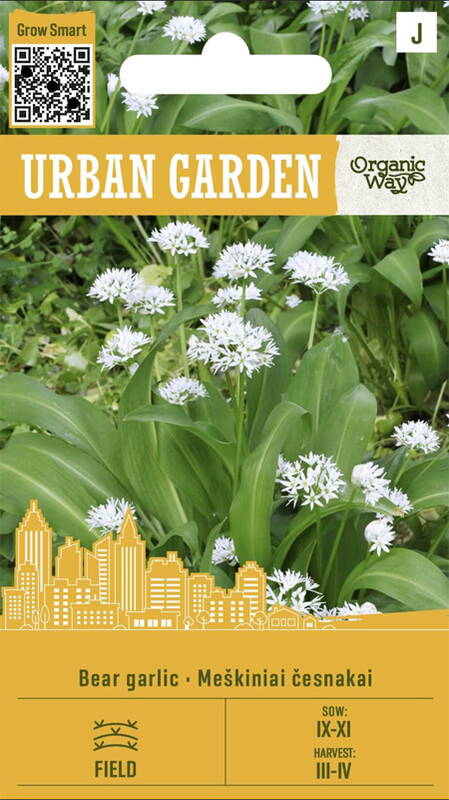
Ramson (Bear's garlic, Wild Garlic) - Аllium ursinum L.
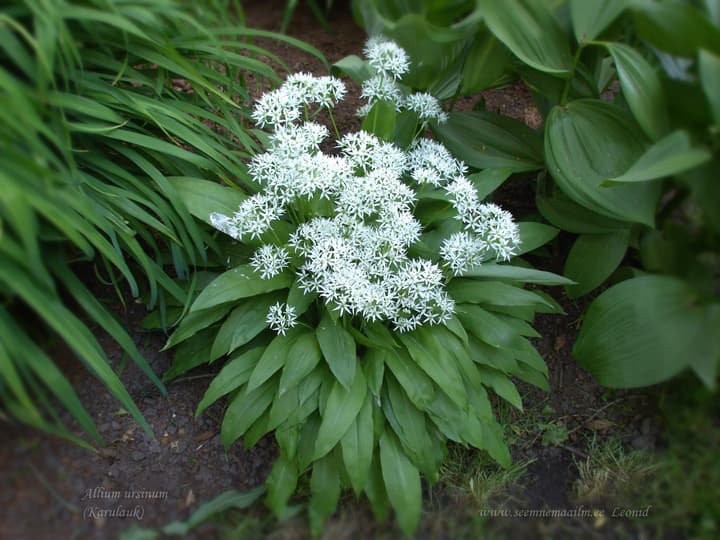
A perennial aromatic plant up to 50 cm tall. The bulb is white, elongated, and small. The plant develops only two broad lanceolate leaves (5–8 cm wide) that appear immediately after the snow melts. The active vegetation period is short — 25–30 days.
Growing from seed: when sown from seed, a full stem forms only in the 4th–5th year. Seeds are best sown before winter (late autumn). For spring sowing, stratification is mandatory: keep seeds in moist sand at 0...+4°C for 90 days, and plant only those that have sprouted.
Sowing is done in shaded areas with loose, lime-rich soil.
Attention: dry seeds germinate only after exposure to cold (winter sowing or artificial stratification).
The plant wakes up very early. In the second year, small bulb sets form, which can be transplanted.
Harvesting: greens are harvested in late May before flowering. Cut the entire above-ground part, leaving the bulb in the soil. To avoid depleting the plantation, harvest from the same spot no more than once every 2–3 years.
Wild garlic greens have a pleasant mild garlic taste. Young shoots and leaves are used fresh (in salads), pickled, fermented, or dried. It is an excellent filling for pies and an addition to meat dishes. Tip: to soften the strong odor before pickling, scald the greens with boiling water.
1.0 g = 145–165 seeds.
A perennial aromatic plant up to 50 cm tall. The bulb is white, elongated, and small. The plant develops only two broad lanceolate leaves (5–8 cm wide) that appear immediately after the snow melts. The active vegetation period is short — 25–30 days.
Growing from seed: when sown from seed, a full stem forms only in the 4th–5th year. Seeds are best sown before winter (late autumn). For spring sowing, stratification is mandatory: keep seeds in moist sand at 0...+4°C for 90 days, and plant only those that have sprouted.
Sowing is done in shaded areas with loose, lime-rich soil.
Attention: dry seeds germinate only after exposure to cold (winter sowing or artificial stratification).
The plant wakes up very early. In the second year, small bulb sets form, which can be transplanted.
Harvesting: greens are harvested in late May before flowering. Cut the entire above-ground part, leaving the bulb in the soil. To avoid depleting the plantation, harvest from the same spot no more than once every 2–3 years.
Wild garlic greens have a pleasant mild garlic taste. Young shoots and leaves are used fresh (in salads), pickled, fermented, or dried. It is an excellent filling for pies and an addition to meat dishes. Tip: to soften the strong odor before pickling, scald the greens with boiling water.
1.0 g = 145–165 seeds.
* Important growing nuances.
From seed, the adult plant forms slowly: it reaches normal size only in the third year. After the first year, the bulb will be as thin as 1/3 of a sewing needle. Therefore, the planting site must be carefully cleared of weeds.
Freshly collected seeds have the best germination rate. Seeds in the inflorescence ripen unevenly. To avoid loss, put a paper bag over the flower head or cut it off entirely to ripen while hanging.
Planting site: Wild garlic loves shade. Ideal spots are under tree canopies, bushes, or along a north-facing fence.
Care: starting from the second year, it is advisable to mulch the beds with fallen leaves. The bulb "rises" 0.5 cm out of the ground annually and sends out horizontal roots. Mulch creates a natural "layer cake" of humus, which is the best fertilizer.
Plantation math: one plant produces up to 120 seeds. Starting with 100 seedlings, you can eventually develop a large plantation. Remember: a cut plant takes 2 years to recover, so sow new seeds annually for a continuous harvest.
Botanical reference.
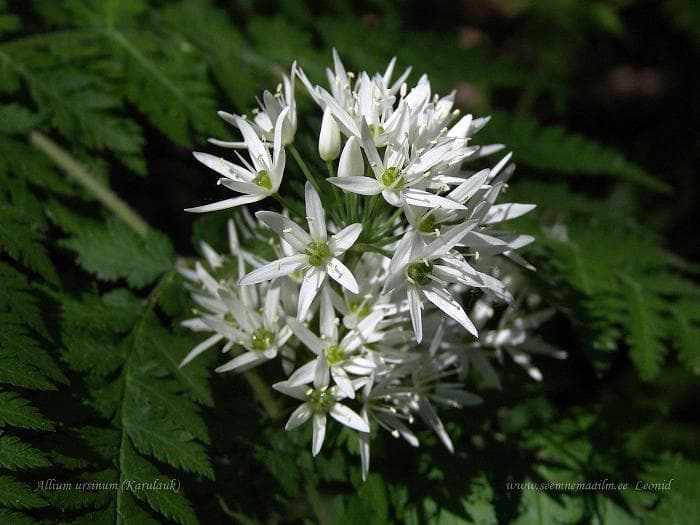
Bear's Garlic (Allium ursinum L.) is a perennial of the Allium family. The stem is triangular, the inflorescence is a semi-spherical umbel with white star-shaped flowers. The fruit is a triangular capsule with black spherical seeds.
Biology: shade-tolerant, prefers moist loam. Grows in April, flowers in May-June, seeds ripen in July.
Propagation: by seeds (self-seeding) and vegetative (division of bulb clusters). Agrotechnics are similar to onions but with a requirement for shade and moisture.
Medicinal value.
A real treasure trove of Vitamin C (up to 150 mg%), phytoncides, and essential oils. In folk medicine, it is a powerful remedy against scurvy, worms, and colds. It stimulates appetite and digestion. Alcohol tincture is used for coughs and rheumatism.
Culinary uses.
Wild garlic is a natural preservative (phytoncides slow down meat spoilage). In the Caucasus, both bulbs and stems are eaten. In Europe (e.g., Portugal), vegetables are baked with it. When dried, the aroma weakens, but the taste remains — used as a spice in winter. Chopped bulb with red pepper and sour cream makes a delicacy sauce for fish.
* Medicinal use (all parts of the plant).
Contains: ascorbic acid, saponins, vegetable wax, beneficial mucilage.
Action: antimicrobial, anti-sclerotic, digestive tonic.
Indications: vitamin deficiency, gastroenteritis, hypertension, neurasthenia.
External use: bulb pulp is applied to boils; tincture is rubbed on aching joints.
It is a valuable dietary raw material rich in iodine.